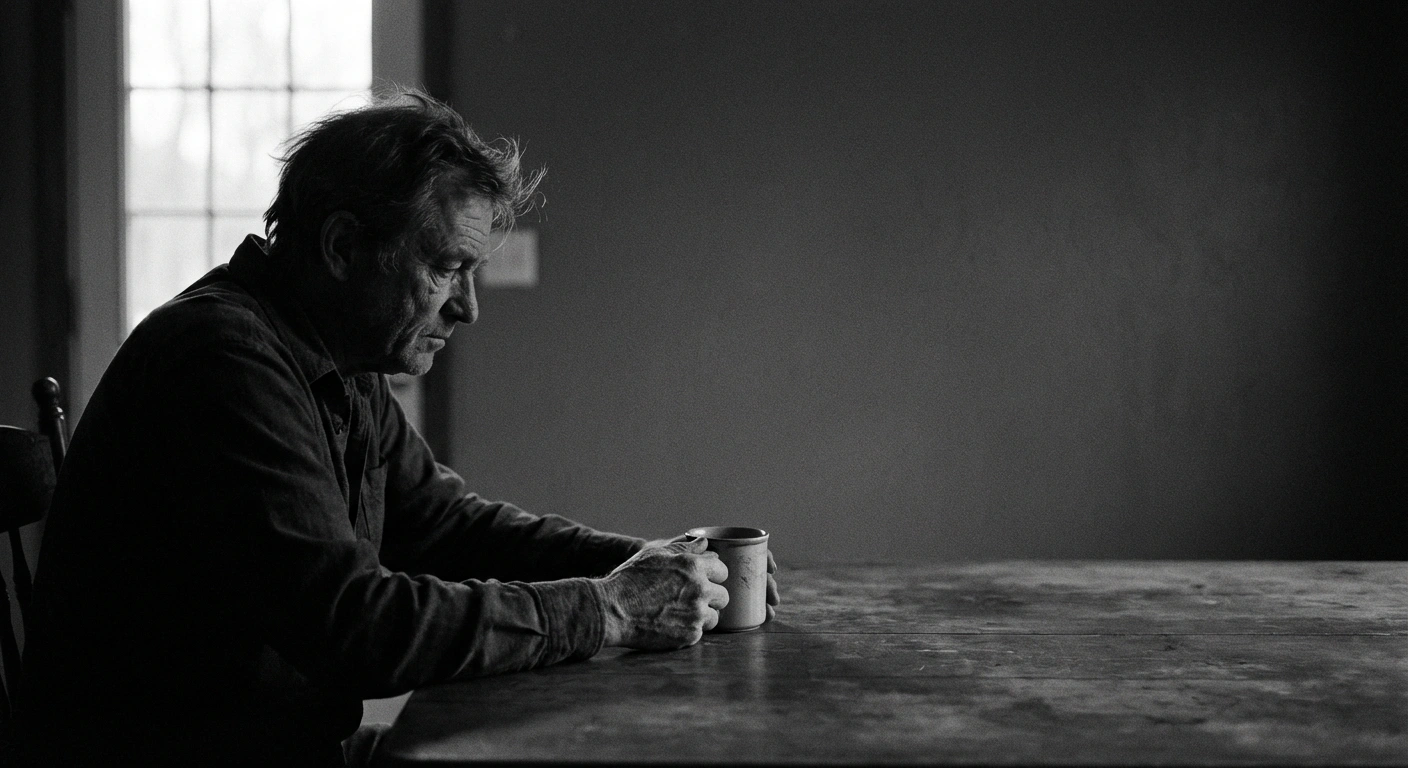
Anxiety in men over 40 rarely announces itself the way it does in a therapist's waiting room. There is no breakdown, no admission of fear, no reaching out for help. Instead, a man becomes irritable. He stops enjoying things he used to love. His jaw aches every morning from grinding his teeth at night. He is exhausted but cannot sleep, restless but cannot settle.
This is male anxiety: quieter, harder to name, and often mistaken for something else.
About 14.3% of men in the United States meet the criteria for an anxiety disorder at some point in their lives, according to the Anxiety and Depression Association of America. That number understates the actual burden. Men are far less likely to seek help, report symptoms to a doctor, or recognize what they are dealing with. In a given year, only 14.6% of men sought mental health treatment, compared to 25.6% of women.
After 40, the gap between what men experience and what they report widens further. Hormonal shifts, career pressure, relationship strain, and physical decline feed anxiety through mechanisms specific to this life stage. The research on treatment is strong, and what works for men is not complicated. But you have to recognize the problem first.
Medical disclaimer: This article is for informational purposes only and does not constitute medical advice. Consult your physician or a qualified healthcare professional before making any decisions about mental health diagnosis or treatment.
Why Anxiety Looks Different in Men
A 2021 systematic review of male anxiety (published in the Journal of Affective Disorders, PMID: 34517242) confirmed what clinicians who work with men already know: male anxiety presentations differ from the textbook description used to train most providers. The clinical picture in men tends to include:
- Physical complaints in place of emotional language
- Irritability and anger rather than expressed fear or sadness
- Behavioral withdrawal rather than seeking reassurance
- Risk-taking as a way to discharge internal tension
- Work over-investment as structured avoidance
Men also lean toward problem-focused coping strategies. When a problem has a concrete solution, this serves them well. When the stressor is ambiguous, ongoing, or outside their control, the same approach generates cycles of rumination without relief. The attempt to "solve" generalized anxiety by thinking harder about it makes the condition worse.
One reason symptoms look different: men learn early that expressing fear or worry carries social costs. Over decades, many men convert anxiety into something more socially acceptable. Frustration, physical tension, relentless productivity. By midlife, some men are genuinely unaware of their anxiety because the conversion has become automatic.
Physical Symptoms That Signal Anxiety
These are the physical signs men with anxiety actually experience. Most seek treatment for each one in isolation and never connect them to a shared source.
Chronic muscle tension and jaw pain. Anxiety keeps the fight-or-flight system active. Muscles in the jaw, neck, shoulders, and lower back stay contracted for hours. Over time, this produces persistent soreness, tension headaches, and temporomandibular joint problems. Many men treat these as orthopedic issues for years.
Racing or pounding heart. The sympathetic nervous system releases adrenaline in response to perceived threats. With generalized anxiety, that response fires repeatedly without an obvious trigger. A racing heart at rest, or brief palpitations during routine activities like meetings or traffic, often leads men to cardiology before anyone asks about stress.
Digestive disruption. The gut and brain share the enteric nervous system. Anxiety disrupts gut motility and alters the microbiome. Symptoms include nausea, irregular bowel habits, bloating, and acid reflux. Many men accumulate years of gastrointestinal investigations before anyone connects the pattern to anxiety.
Fatigue that does not resolve with sleep. Cortisol dysregulation from chronic anxiety disrupts the normal daily cortisol curve. Men feel wired at night and drained during the day. Sleep that should restore them does not. This overlaps significantly with brain fog, and the two conditions frequently coexist.
Sweating and temperature sensitivity. Disruption in autonomic nervous system regulation produces sweating, flushing, and heat sensitivity that men attribute to other causes. This is particularly common after 40, when it is often misread as early andropause or cardiovascular changes.
Persistent restlessness. An internal agitation that makes it difficult to relax, read, watch something, or simply be present. Men describe feeling perpetually behind or unable to fully switch off, even when circumstances do not warrant it.
Headaches. Tension headaches from contracted neck and scalp muscles, often attributed to dehydration, eye strain, or blood pressure issues. In men with anxiety, these typically respond better to stress management than to pain medication.
Emotional and Behavioral Signs
The emotional presentation in men with anxiety often bears little resemblance to clinical textbook descriptions.
Irritability disproportionate to the trigger. A small frustration produces a large reaction. This is not a character flaw. Chronic sympathetic nervous system activation lowers the threshold for anger because the system is already running at high capacity. The outburst is a symptom, not a personality trait.
Structured avoidance. Social events, crowds, unfamiliar situations, or contexts with unpredictable outcomes get quietly removed from a man's life. What looks like introversion or preference is often systematic avoidance. The key signal: activities that used to be enjoyable are now skipped.
Obsessive planning and control-seeking. Rigid schedules, fixed routines, difficulty delegating, strong preferences about how things are done. The need for control is a coping strategy for tolerating uncertainty. When circumstances violate the plan, the anxiety breaks through.
Concentration difficulties. Anxiety redirects attention toward threat monitoring. Cognitive resources that should go to work or conversation go instead to scanning for problems. This overlaps with brain fog and makes sustained focus on demanding tasks harder.
Loss of enjoyment in previous activities. Anhedonia is associated primarily with depression, but anxiety produces it as well. When worry occupies foreground attention, present-moment experience becomes inaccessible. The activities that used to provide relief stop delivering it.
Increased alcohol use. Alcohol suppresses the central nervous system and temporarily reduces anxiety. Men with untreated anxiety use alcohol at higher rates, often without recognizing the connection. The relief is real but short-lived. The rebound the following day, driven by increased cortisol, makes anxiety worse.
The Hormonal Connection After 40
After 40, several biological changes create conditions where anxiety becomes more likely and more persistent.
Testosterone decline. Starting around 35, testosterone drops 1 to 3% per year. Testosterone is not only a sex hormone. It modulates the amygdala, the brain region that detects threats and triggers fear responses. Lower testosterone correlates with higher amygdala reactivity. The brain flags more situations as threatening.
Research involving 1,548 men found that those under high psychological stress had testosterone levels averaging 15% lower than less-stressed counterparts, with the effect stronger in men over 40. Men with testosterone below 300 ng/dL showed cortisol stress responses 40% higher than men with normal levels. The feedback loop runs in both directions: low testosterone raises cortisol, elevated cortisol suppresses testosterone production, and anxiety escalates.
If you suspect a hormonal factor, the guide on signs of low testosterone in men over 40 covers the full symptom picture.
Cortisol elevation. Chronic cortisol elevation, which rises with age and chronic stress, impairs hippocampal function and weakens the prefrontal cortex's capacity to regulate emotional responses. Both changes amplify anxiety and make worry cycles harder to interrupt.
Sleep degradation. Anxiety impairs sleep, and poor sleep worsens anxiety. Men over 40 experience more frequent sleep fragmentation, reduced slow-wave sleep, and earlier waking. The guide on how to improve sleep quality for men over 40 covers the evidence-based interventions.
Thyroid dysfunction. Subclinical hypothyroidism and hyperthyroidism both produce anxiety-like symptoms. Men over 40 are screened for thyroid issues less frequently than women, making this an underdiagnosed contributor worth ruling out with a basic panel.
Common Midlife Triggers
Several situational stressors concentrate in the 40s and 50s and often arrive together.
Career pressure and purpose questions. Two decades into a career, the trajectory often feels less certain or less meaningful than expected. Promotions plateau. Younger colleagues compete for the same positions. The professional identity that anchored a man's sense of self starts to feel less stable. For the full picture, see the midlife crisis guide for men.
Health confrontations. A first major diagnosis, a health scare in a peer, or the death of a parent brings mortality from abstract to present. Men who avoided medical care for years suddenly face it all at once.
Financial pressure. College tuition, aging parents, retirement shortfalls, and peak mortgage debt often converge in the same decade. Financial stress is a documented anxiety amplifier, and for men whose identity connects to providing, financial strain carries additional psychological weight.
Relationship strain. Marriages face different pressures at midlife. Communication patterns that worked when both partners were consumed with young children surface when children leave. A 2024 systematic review identified loneliness as one of the strongest predictors of anxiety in middle-aged men, and loneliness within a relationship is common and often unnamed.
Physical decline. Slower recovery, muscle loss, joint discomfort, and changing sexual function erode the physical confidence many men use to stabilize their self-image. The losses are real, but the meaning men attach to them often amplifies the distress beyond the physical reality.
What Actually Helps
Exercise: The Highest-Leverage Intervention
A systematic review in Behavioural and Cognitive Psychotherapy confirmed that exercise reduces anxiety through mechanisms distinct from psychological treatments. Aerobic exercise at moderate intensity, three times per week for 20 to 30 minutes, produces measurable reductions in anxiety scores within two to four weeks.
The mechanisms are concrete: exercise reduces cortisol over time, increases BDNF (a neurochemical that supports prefrontal cortex function and stress resilience), raises GABA activity, and improves sleep architecture. All of these directly counter the biological drivers of anxiety in men over 40.
Strength training carries separate benefits. Resistance training research shows independent anxiety-reduction effects, likely through testosterone-supportive mechanisms and the development of genuine physical competence.
Cognitive Behavioral Therapy
CBT is the most rigorously studied psychological intervention for anxiety. A 2022 meta-analysis in Current Psychiatry Reports found effect sizes of Hedges' g = 0.56 for target disorder symptoms, a strong clinical effect. Response rates in CBT were nearly three times higher than placebo conditions.
Men who resist traditional therapy often respond well to CBT because it is structured, problem-focused, and teaches specific skills: thought records, behavioral experiments, graded exposure to avoided situations. This format aligns with how many men prefer to work through problems. Online and app-based CBT programs now produce results comparable to in-person therapy for mild to moderate anxiety, which lowers the barrier to starting.
Sleep as a Medical Priority
Sleep is not a lifestyle preference for men managing anxiety. It is a biological requirement. Target seven to nine hours, consistent sleep and wake times, a cool dark room, and no screens in the 60 minutes before bed. Alcohol within three hours of sleep fragments sleep architecture and raises cortisol, increasing anxiety the following day despite the short-term sedation effect.
Dietary Factors
Three nutritional levers have direct evidence:
Magnesium: Critical for GABA receptor function, the primary inhibitory neurotransmitter system. Deficiency is common in men over 40 and correlates with heightened anxiety and sleep disruption. The full evidence is covered in the magnesium supplement guide.
Omega-3 fatty acids: A meta-analysis in JAMA Network Open found EPA-dominant omega-3 supplementation at 2g or more per day reduced anxiety symptoms in clinical populations. Standard fish oil capsules typically provide 300 to 500mg of combined EPA and DHA, requiring multiple capsules to reach therapeutic doses.
Caffeine reduction: Caffeine blocks adenosine receptors and directly stimulates sympathetic nervous system activity. Men with anxiety who consume more than 200mg per day often report meaningful symptom improvement when they cut intake. That threshold is roughly two standard coffees.
Ashwagandha
Among adaptogenic supplements, ashwagandha carries the strongest evidence for anxiety reduction in men. Multiple randomized controlled trials show reductions in cortisol levels and validated anxiety scores with doses of 300 to 600mg of standardized root extract daily. The full evidence review and dosing details are in the ashwagandha for men over 40 guide.
Social Connection
Loneliness is one of the strongest predictors of anxiety in middle-aged men, confirmed by a 2024 systematic review in the European Journal of Ageing covering over 40,000 adults. Men over 40 typically have fewer close friendships than they did at 30. Friendships contracted as careers, children, and obligations expanded.
The intervention is direct: identify two or three relationships worth maintaining and schedule consistent contact. Purpose-driven social contexts, team sports, volunteering, professional mentorship, provide structure that makes ongoing connection easier than purely social arrangements.
When to See a Doctor
These signs indicate anxiety that warrants professional evaluation rather than self-management:
- Panic attacks: sudden, intense fear with physical symptoms lasting minutes
- Anxiety that impairs work performance or relationships
- Symptoms present most days for more than six months without improvement
- Suicidal thoughts, including passive ones ("I would not mind not waking up")
- Significant alcohol or substance use as a coping mechanism
- Physical symptoms that have not been evaluated medically
A GP (general practitioner) can rule out thyroid dysfunction, adrenal issues, and other medical contributors before attributing symptoms to anxiety. When testosterone is below range, referral to endocrinology or a men's health specialist is appropriate. If anxiety is significantly impairing function, a psychiatrist or psychologist referral is worth pursuing rather than waiting to see if it improves on its own.
Anxiety Symptom Self-Check
Use this brief assessment to gauge whether your current symptoms suggest low, moderate, or higher concern. This is not a diagnostic tool.
Self-Assessment
Are Your Symptoms a Sign of Anxiety?
Answer these 6 questions honestly. This is not a diagnosis — it helps you gauge whether your current symptoms suggest low, moderate, or higher concern.
Question 1 of 6
Do you feel a persistent sense of worry, dread, or unease that you cannot easily switch off — even when nothing specific is wrong?
Frequently Asked Questions
Is anxiety common in men over 40?
Anxiety disorders affect approximately 14.3% of men at some point in their lives. After 40, hormonal changes, career pressure, health concerns, and relationship stress create conditions that increase risk. The actual prevalence is likely higher, because men underreport symptoms and seek treatment at significantly lower rates than women.
How do I know if I have anxiety or just normal stress?
Normal stress has a clear trigger and resolves when the trigger passes. Anxiety persists across situations, is disproportionate to actual threat level, and continues without an obvious cause. Physical symptoms at rest, structured avoidance of previously enjoyable activities, and persistent worry that you cannot control are the key signals.
Can low testosterone cause anxiety?
Yes. Testosterone modulates the amygdala and the body's stress response system. Men with low testosterone show elevated cortisol responses to stress and higher rates of both anxiety and depression. Addressing testosterone levels can reduce anxiety symptoms in some men, particularly when levels fall below 300 ng/dL.
Does exercise actually help with anxiety?
Multiple systematic reviews confirm that aerobic exercise reduces anxiety symptoms. The effect is robust across both clinical anxiety disorders and subclinical anxiety. Moderate-intensity cardio three times per week is the minimum effective dose in the published literature.
What is the fastest way to reduce anxiety symptoms acutely?
Controlled breathing activates the parasympathetic nervous system within minutes. A pattern of four-count inhale, four-count hold, and six-count exhale reduces physiological arousal measurably. This is a tool for acute management, not a treatment for persistent anxiety. CBT, exercise, and addressing underlying hormonal or sleep issues produce lasting improvements.
Should I take medication for anxiety?
SSRIs and SNRIs are effective for anxiety disorders and carry a strong evidence base. For mild to moderate anxiety, CBT and lifestyle interventions often produce comparable results without side effects. A GP or psychiatrist can determine whether medication is appropriate based on symptom severity and individual history. Medication and therapy together typically outperform either approach alone.
Medical Disclaimer: This article is for informational purposes only and does not constitute medical advice. Always consult your healthcare provider before starting any new exercise, nutrition, or supplement program.